

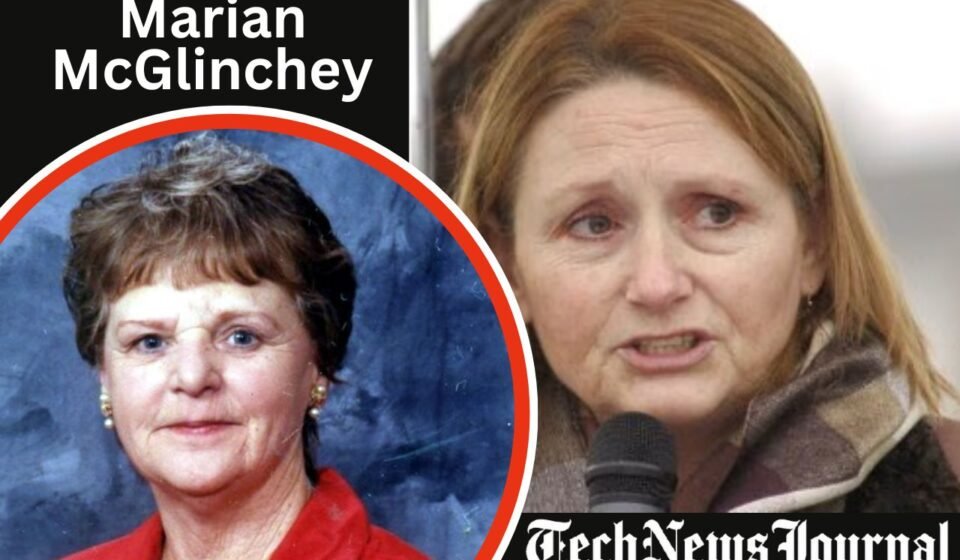

Some names from the history of Northern Ireland carry weight far beyond the individuals who hold them. Marian McGlinchey is one of those names. Better known to the public as Marian Price, she has spent decades at the center of debates about Irish republicanism, political violence, and memory. Her story reaches back into one of the most turbulent periods in modern British and Irish history, and it has resurfaced again through television and the courts. This article explains who she is, why she matters, and why her name keeps returning to the headlines.
Who Is Marian McGlinchey?
Marian McGlinchey is the married name of Marian Price, a figure long associated with Irish republican activism. She was born in 1954, and she became publicly known through her involvement with the Provisional Irish Republican Army, often shortened to the Provisional IRA. The two names refer to the same person, though most historical accounts and news reports continue to use “Marian Price.”
For many readers encountering her story for the first time, the dual identity can be confusing. The shift from Price to McGlinchey reflects a personal change, but her public reputation remains tied to the events of her earlier life. Understanding that connection is the first step to grasping her place in the historical record.
Her Association With the Provisional IRA
Marian Price is described as a former Provisional IRA volunteer. The Provisional IRA emerged during the late 1960s and grew into one of the principal paramilitary organizations involved in the conflict known as The Troubles. Members of the group, often called volunteers, were involved in campaigns that defined a deeply divided era in Northern Ireland.
Her identity as a former volunteer places her within a generation of activists whose choices shaped, and were shaped by, that conflict. Her name appears in historical and journalistic accounts precisely because of this affiliation. For decades, she has been regarded as a notable individual within the broader narrative of republican militancy.
Why She Is Historically Significant
The significance of Marian McGlinchey lies in how her personal story intersects with larger historical forces. The Troubles were not an abstract political dispute. They involved real communities, families, and individuals whose lives were transformed by violence and ideology. Figures like Price became reference points for understanding how ordinary people were drawn into extraordinary circumstances.
Her name continues to appear in serious discussions of the period because she represents more than a single event. She embodies questions that historians, journalists, and the public still wrestle with. How do societies remember those who took part in conflict? How should their actions be understood decades later? These questions keep her relevant long after the events themselves.
The Troubles and the Public Memory of Conflict
To understand why Marian McGlinchey matters, you have to understand the backdrop against which she is remembered. The Troubles refers to the prolonged conflict in Northern Ireland that drew in paramilitary groups, security forces, and civilians. It left a lasting mark on the region and shaped political and cultural conversations for generations.
Public memory of this period remains contested. Different communities recall the same events in very different ways, and the line between historical fact and personal interpretation can be sharp. Individuals like Price sit at the heart of this contested memory. Their stories are recounted, dramatized, and debated, and each retelling carries the potential to reopen old wounds or spark new disagreements.
Why Her Name Has Resurfaced Recently
In recent years, Marian Price has returned to public attention largely because of the television series Say Nothing. The show dramatizes events connected to The Troubles, and its release prompted renewed interest in the real people behind its characters. Feature coverage has explored questions such as where Marian Price is now, reflecting the public’s curiosity about figures from that era.
This renewed visibility shows how powerful dramatized history can be. A television adaptation can introduce a new audience to events and individuals they may never have studied otherwise. It can also place living people back into a spotlight they may not have sought. For someone with Price’s history, that attention carries unusual weight and sensitivity.
The Say Nothing Adaptation and the Disney+ Legal Dispute
The most pointed recent development involves reported legal action. According to coverage from the BBC, Marian Price intended to sue Disney+ over how she was portrayed in Say Nothing. The reporting indicates that she was depicted in a dramatized scene connected to one of the most notorious killings associated with The Troubles, the murder of Jean McConville.
This dispute highlights a tension at the core of historical drama. Creators of such series often blend documented events with dramatized interpretation. When real, living individuals are shown carrying out specific acts, the stakes rise sharply. A scene intended as storytelling can be experienced by the subject as a serious public accusation.
The reported intention to take legal action against Disney+ reflects that tension. It raises difficult questions about the responsibilities of filmmakers, the rights of those depicted, and the boundary between artistic license and factual claim. These are not simple matters, and they explain why the story attracted significant media coverage.
The Broader Questions Her Story Raises
Marian McGlinchey’s case touches on themes that extend well beyond one person. It invites reflection on how history is told, who gets to tell it, and what obligations storytellers owe to the people they portray. Dramatizations of real conflict can educate and engage, but they can also simplify complex lives into single, memorable scenes.
Her story also underscores how the past remains present. The Troubles may be associated with earlier decades, but their legacy continues to shape lives, reputations, and legal disputes today. Each new adaptation or report reminds audiences that this history is still raw for many of those involved.
Read More: Harvey Kirby Ross: The Private Life Behind a Familiar Surname
Conclusion
Marian McGlinchey, known publicly as Marian Price, occupies a distinctive place in the history of Northern Ireland. As a former Provisional IRA volunteer, her name is woven into the wider story of The Troubles and the contested memory that surrounds it. Her significance comes not only from her past but from the way that past continues to be retold and debated.
Her recent return to the headlines, driven by the Say Nothing series and the reported legal action against Disney+, shows how unresolved that history remains. It also illustrates the delicate balance between dramatizing real events and respecting the people at their center. If you want to understand the human dimension of The Troubles and the modern tensions around historical storytelling, her story offers a compelling and sobering starting point. The next step is to follow how disputes like hers shape the way difficult histories are told in the years ahead.