


Searching for a single name can sometimes lead you down two completely separate paths. “Ruth Neave” is a good example. The same name shows up in a professional networking profile and in years of crime reporting, yet there is no clear evidence that these references point to the same person. This article walks through what the available sources actually say, keeps the two contexts separate, and avoids drawing conclusions the information doesn’t support.
The goal here is clarity. If you’ve come across the name and felt confused about who exactly is being discussed, you’re not alone. Names overlap more often than people expect, and treating different individuals as one person can be both inaccurate and unfair. Below, we look at each context on its own terms.
Why One Name Can Point to Several People
Names are not unique identifiers. Plenty of people share the same first and last name, and search engines group results by text match rather than by verified identity. So when you type “Ruth Neave” into a search bar, the results can mix together unrelated individuals who simply happen to share a name.
This matters for accuracy. A professional profile and a news story can sit side by side in search results without having anything to do with each other. Keeping them separate protects against the easy mistake of assuming a single biography. Throughout this article, treat each reference as potentially belonging to a different person unless the sources clearly connect them, which in this case they do not.
The Professional Profile: A Technical Product Manager in Perth
One reference to Ruth Neave appears on LinkedIn, where the profile identifies her as a Technical Product Manager at MDDUS. According to that listing, she is based in Perth and lists her education at Perth Academy. The profile also notes a modest network of around 80 connections.
A Technical Product Manager role generally sits at the intersection of engineering and product strategy, meaning the person helps guide how a product is built and how it meets user needs. MDDUS is named as the employer, and Perth is given as the location. Beyond these straightforward professional details, the available information does not offer more, and it would be inappropriate to speculate further about this individual’s career or personal life.
What’s worth emphasizing is that this profile reflects an ordinary professional presence. There is nothing in the surfaced details linking this Ruth Neave to anything beyond her stated job, location, and education.
The News Coverage: A Name Tied to the Rikki Neave Case
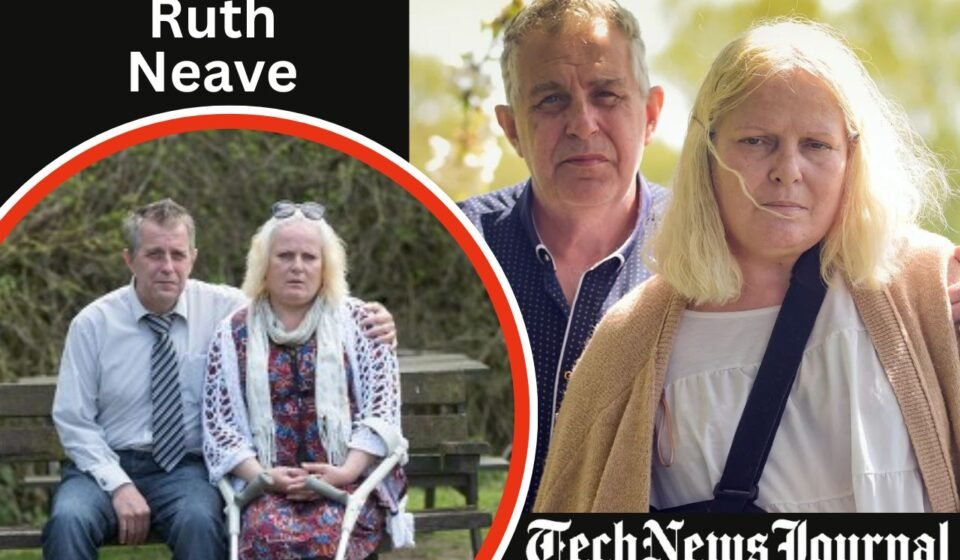
A separate set of references uses the name Ruth Neave in the context of long-running crime reporting. These sources describe Ruth Neave as the mother of Rikki Neave, a six-year-old boy from Peterborough whose death became the subject of extensive coverage. One article points to a Channel 5 documentary that revisits the case and mentions that his mother waited 28 years before the matter reached a resolution.
Another article frames her life in difficult terms, describing decades of hardship and long involvement with social services. The reporting characterizes this as a prolonged and troubled history rather than a single event.
Because this is sensitive subject matter involving a child’s death and a serious criminal case, it deserves to be handled with care. The details available here are limited to what the sources state directly, and this article does not expand on them. The intent is simply to acknowledge that the name appears in this context, not to retell or reinterpret the case.
Keeping the Two References Distinct
It would be easy, and wrong, to blend these two contexts into one story. A Technical Product Manager in Perth and a person named in crime reporting are not automatically the same individual just because they share a name. The surfaced information offers no link between them, and assuming a connection would risk attaching a serious news context to an unrelated professional, or vice versa.
This is exactly the kind of situation where careful reading matters. When you encounter mixed search results, the responsible approach is to verify identity through specific, confirmed details rather than relying on a name alone. Here, the location, employer, and education attached to the professional profile do not appear in the news coverage, and the news coverage offers no professional or geographic details that would tie it to the LinkedIn listing.
What This Tells Us About Searching for People Online
The Ruth Neave example is a useful reminder of how online identity works in practice. Search tools surface anything that matches the text you enter, which means unrelated lives can end up presented together. That overlap can create false impressions if you accept the results at face value.
A more careful method is to look for distinguishing markers: a specific employer, a confirmed location, an education history, or a clearly described event. When those markers don’t align, the safest assumption is that you may be looking at different people. This habit protects both accuracy and the individuals involved, especially when one context is sensitive.
Read More: Harvey Kirby Ross: The Private Life Behind a Familiar Surname
Conclusion
The name Ruth Neave appears in at least two separate contexts. One is a professional profile describing a Technical Product Manager at MDDUS in Perth, with education at Perth Academy. The other is news coverage referring to Ruth Neave as the mother of Rikki Neave in long-running crime reporting. The available information does not connect these references, and they may well involve entirely different people.
If you’re researching this name, the single most useful next step is to confirm identity through specific, verifiable details rather than relying on the name itself. That small habit prevents you from merging unrelated lives into one inaccurate picture.